

We see it all the time… You’re putting in the miles, showing up consistently, doing the hard work.
But something feels off: Low energy, legs feel flat, recovery takes forever, and your long runs feel harder than they should.
So, we start asking a few questions, and it often comes back to one simple thing:
You’re not fueling enough!
You’re Not Just Eating for “Life” Anymore
As a runner training for longer distances, you’ve got two jobs when it comes to nutrition:
1. Fuel your life (baseline)
This is your basal metabolic rate, the calories your body needs just to exist.
2. Fuel your training
This is everything you’re doing on top of that: easy runs, workouts, long runs, strength work, and generally a more active lifestyle.
Your body might need 1,800–2,400 calories/day just to function
- Add a long run? That’s another 800–1,500+ calories
- Now you’re easily in the 3,000+ calorie range, and shockingly, most runners are nowhere close!
If You Feel Flat… This Is Probably Why
When your nutrition doesn’t match your training, it shows up fast:
- Long runs feel harder than they should
- You’re dragging through workouts
- Recovery is slow
- You’re constantly sore or tired
This isn’t a toughness issue, it’s a fueling issue.
Your #1 Goal Isn’t cutting calories — It’s Fueling Performance
Let’s Talk Timing (Without Overcomplicating It)
You don’t need to be perfect, but you do need to fuel intentionally.
Easy Run Days (short + low intensity)
- Don’t stress too much
- Eat normally, stay hydrated
Workout or Long Run Days – Now it matters!
3 Hours Before Your Run
Keep it simple:
- Easy-to-digest carbs
- Low-ish protein – less than 15% of your daily goal
- Low fat
Go-to examples:
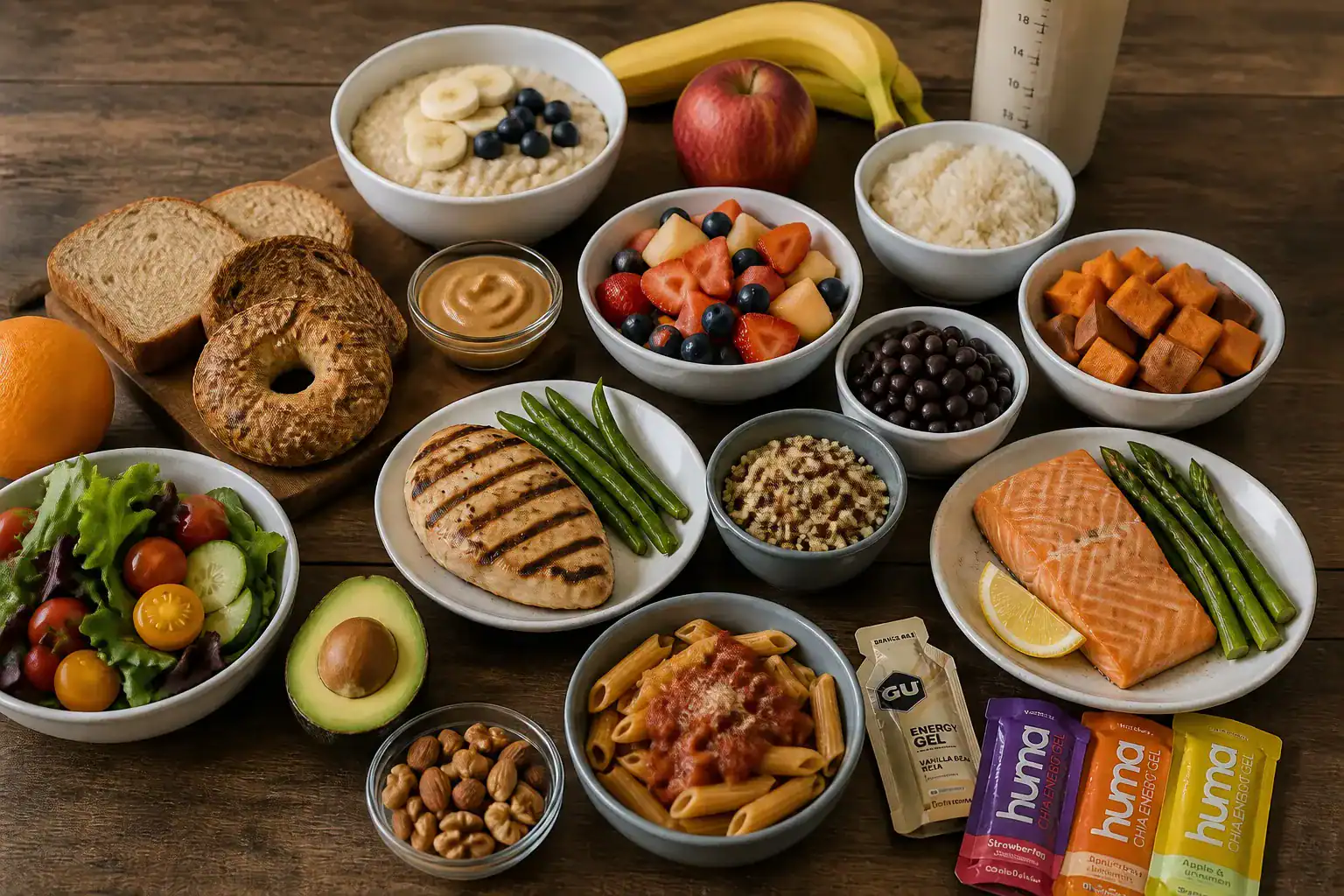
- Bagel + peanut butter + banana + honey
- Oatmeal + banana + honey
- Nothing fancy. Just something your body knows how to use.
Carbs Aren’t the Enemy — They’re the Engine
Especially for half and full marathon training.
But quality matters.
Better choices:
- Rice
- Potatoes
- Oats
- Bread (sourdough, whole wheat)
- Fruit
Not-so-great choices:
- Highly processed cereals and packaged sugar foods
- All carbohydrates, but very different outcome.
The Recovery Killer: Not Enough Protein
Most runners don’t get enough.
Protein isn’t about fueling your run, it’s about recovering from it.
Target:
- About 0.8–1.0g per pound of body weight per day
For example… if you’re 160 lbs:
- You’re aiming for 130–160g/day
Why it matters:
- Muscle repair
- Faster recovery
- Ability to handle higher training volume
Good sources:
- Chicken, fish, lean beef
- Eggs, dairy
- Beans and legumes
Choose Real Food Whenever Possible
Ask yourself:
“How processed is this?”
A potato beats a packaged snack.
Rice beats a sugar-loaded cereal.
Most of the time, simpler is better.
Fueling During Long Runs (This Is Huge)
This is where a lot of distance runners fall short.
If you’re running:
- 90 minutes
- 2 hours
- 3+ hours
You must fuel during the run
General guideline:
- 60–90g of carbs per hour
- ~200–300 calories/hour
That usually looks like:
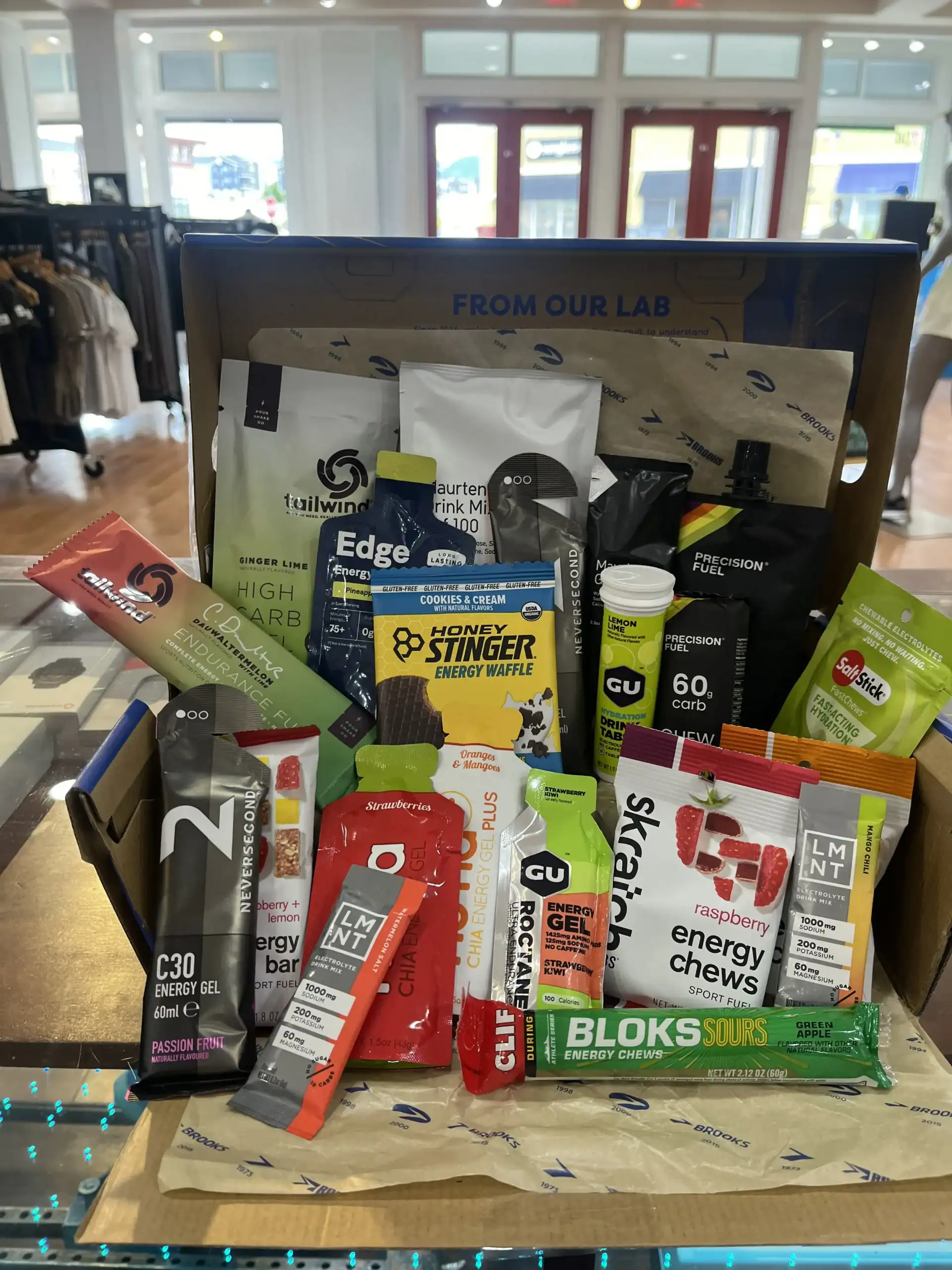
- Gels
- Chews
- Drink mix
And yes, it’s processed. That’s okay here.
You’re not sitting on the couch; you’re asking your body to perform.
What Happens When You Get Fueling Right
When fueling matches your training:
- Long runs feel smoother
- Workouts feel more productive
- Recovery speeds up
- Race day feels like an extension of training
Dialing in your fueling is one of the most powerful ways to optimize your performance.
Final Thought from the Fit Stool
You don’t need a perfect nutrition plan.
But you do need to:
- Eat enough
- Eat consistently
- Fuel your runs
- Recover properly
Most runners are doing the training, the ones who improve fastest are matching it with proper fueling.
If you’ve got questions: this vs. that, what should I eat before a long run, how do I fuel race day? Pull up a stool and let’s talk; that’s what we’re here for.