

One of the most common questions I get—whether it’s in the shop, or on a group run, is:
“I’ve been running consistently, but I’m not getting any faster. What gives?”
If that’s you, trust me, you’re not alone. Honestly, this one’s as much for me as it is for you. Between work, family, friends, and just getting older, it’s easy to fall into the trap of thinking our best times are behind us. I’ve been guilty of what cyclists call “noodling”, just going out and doing the same easy loop every day at the same pace. Nothing wrong with that… but it won’t make you faster.
So here’s the goal: let’s break down two simple workouts that fit into a busy schedule, help you build speed, and minimize the risk of injury. These are staples in my own training, and they’ve made a big difference, not just physically, but mentally.
- Group Track Workouts: Speed Through Community
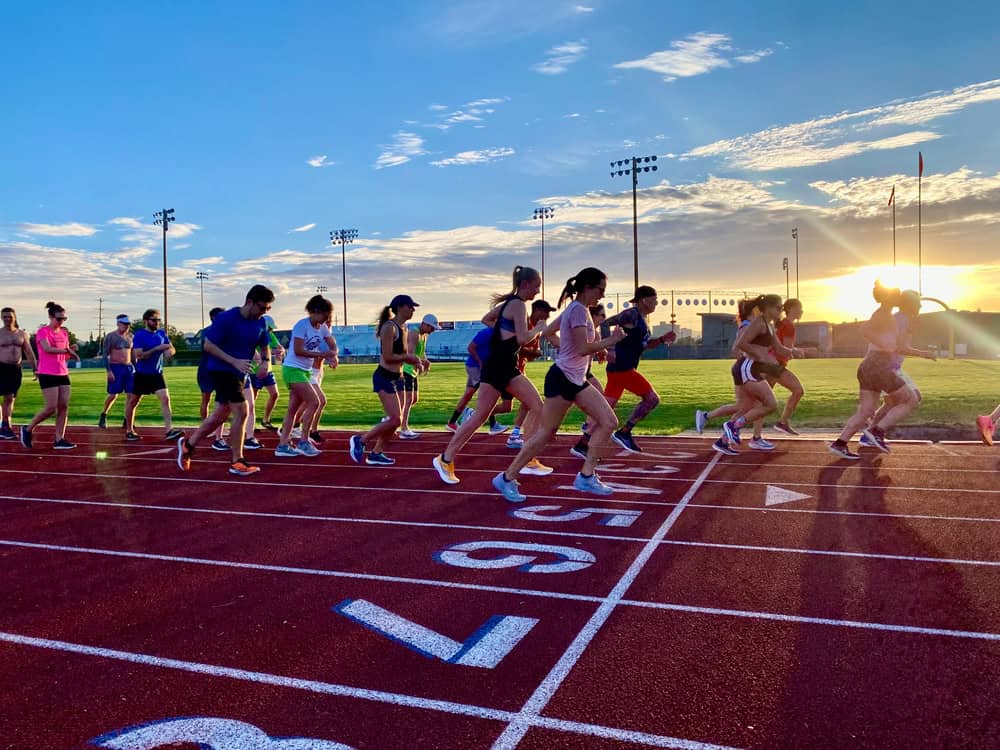
Let’s face it, running 6 x 1 mile at 10K pace alone sounds terrible. It’s hard, mentally draining, and way too easy to skip. But when you’ve got a crew waiting for you at the track, the game changes.
Here in Reno, we’ve got an incredible group that meets every Wednesday at 6:00 a.m.—rain, snow, or shine. We’ve had 50–60 people show up year-round. It’s not about hitting perfect splits or hammering every rep. It’s about showing up, doing something uncomfortable, and being consistent.
And guess what? You get faster. Almost by accident.
The specific workouts vary—some weeks it’s 200s, other weeks it’s 800s or even a mile for time, but the goal is the same: run faster than your normal pace, regularly. A typical set might look like:
- 5 x (3min at 5K goal pace, 1min rest, 1:30 at 5K goal pace, 1min rest)
- Roughly 20 minutes of total fast running, and half time in recovery
The pace pushes you just enough to improve. The group pulls you along, and you leave feeling accomplished every time.
- The Secret Weapon: Hill Sprints
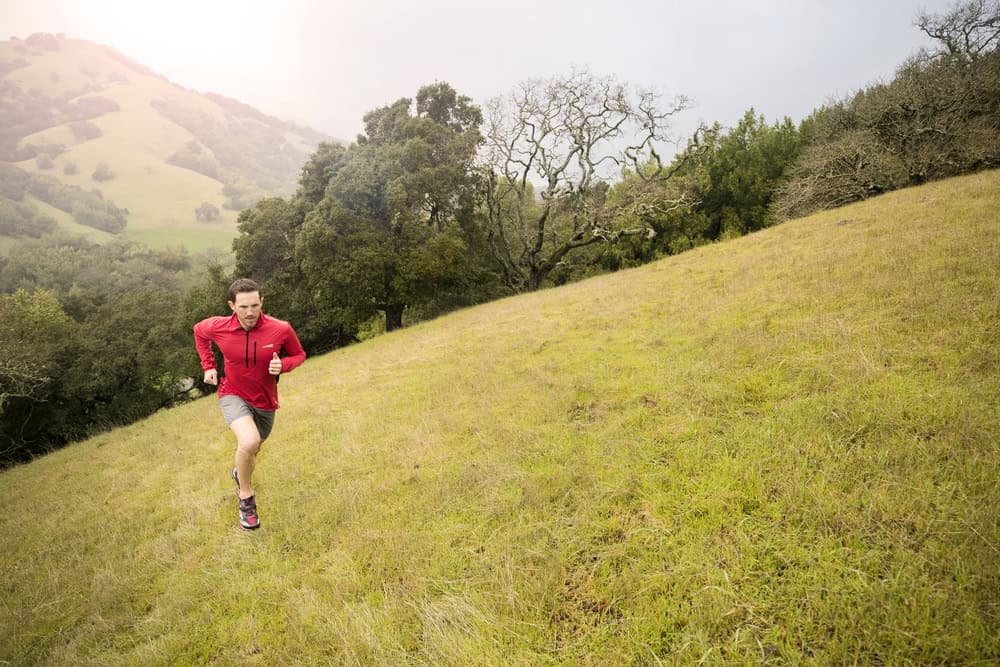
Want to run faster? Then at some point, you’ve got to run fast. But doing all-out sprints on flat ground, especially as we get older, is a recipe for injury. That’s where hill sprints come in—my favorite high-reward, low-risk speed workout.
Here’s how it works:
- Find a hill with a 6–10% grade
- Run 10–15 seconds at 80-90% effort
- Walk back down, recover completely (about 2 minutes)
- Repeat 6–8 times
To ease in, build your speed during the first 5 seconds and hold for the next 10 seconds. Over 3–4 weeks, gradually increase your effort. Eventually, you’ll hit 100% effort—but only once your body is ready.
I recommend doing these at the end of a typical run, not after your longest run or track workout day. The key is quality over quantity and giving your body enough rest to go truly fast each rep.
Local tip: A great spot in Reno is Tunnel to Bench at Rancho San Rafael Park. Firm dirt, solid footing, and a perfect gradient.
Why hill sprints work:
- They activate fast-twitch muscle fibers
- Improve running economy and form
- Train your neuromuscular system to fire more efficiently
- Minimize injury risk thanks to the incline and short duration
Final Thoughts
If you’ve hit a plateau, try mixing in these two sessions:
- Group intervals at 5K pace – once a week, with others if possible
- Short hill sprints – once a week, after an easy run
It doesn’t have to be complicated. You don’t need fancy gear or hours of extra time. Just a little intention, and a little speed goes a long way.
Hope this helps you enjoy the running journey even more. Stay consistent, stay injury-free, and above all, keep showing up.
Cheers!
Matt Balzer